A Slow Living Path: How I Grew a Substack Publication with SEO, Organic Marketing and Brand Strategy
Project overview
A Slow Living Path is my personal Substack publication about slow living, intuitive business, creativity and sustainable marketing.
I created it as a space to write, explore ideas and build a business in a way that felt more intentional. Over time, it developed into a strategic content platform that helped me grow an audience, strengthen my personal brand and attract clients through organic channels.
Rather than relying solely on social media or paid advertising, I used a combination of:
Substack Notes and recommendations.
Search-focused newsletter content.
SEO-optimised titles and articles.
Personal brand development.
Newsletter and welcome email strategy.
Internal linking between related content.
Content created around the problems my ideal clients were searching for.
Within the first year, A Slow Living Path grew to more than 9,000 readers, published 100+ newsletters, gained 500 subscribers in one month through Notes and attracted clients through Google and Substack
The challenge
When I started A Slow Living Path, I did not have a clearly defined niche or a formal growth strategy.
I was writing from intuition, following the ideas that felt most relevant and allowing the publication’s themes to develop through the work. That helped me create an authentic voice, but it also created several strategic challenges:
The publication’s positioning was initially broad.
My content was not always designed for search discovery.
I needed to grow beyond my existing network.
I wanted readers to understand how I could help them professionally.
The Substack needed to become part of my wider personal brand.
I needed to connect content growth with future coaching and consulting services.
The question became:
How could I preserve the personal, intuitive nature of the publication while using SEO and marketing strategy to make it more discoverable and commercially valuable?
I did not want to turn the newsletter into a generic marketing publication. I wanted to build a brand with a clear point of view, one that could attract readers who valued slow, intentional and sustainable approaches to business.
The results
Through a combination of organic audience growth, Substack SEO, brand development and newsletter strategy, A Slow Living Path:
Around 9000 readers, made up of 3,500 email subscribers and 5,500 followers
Attracted 500 subscribers through Notes in one month.
Published 100+ newsletters.
Generated 25,000 monthly impressions from Google.
Attracted clients through Google and Substack.
Clients in the US and UK, and readers around the world.
Received recommendations from more than 50 publications.
Built a recognisable personal brand around slow marketing and intuitive business.
Became the foundation for my Substack coaching and consulting services.
The most important result was not simply audience size. The publication began attracting people who were already interested in the subjects I wanted to be known for: Substack, SEO, organic growth, newsletter strategy and building a business without relying on constant social media visibility.
Project strategy
Over time, I developed a connected strategy across four areas:
Organic newsletter growth.
Substack SEO and search visibility.
Brand and positioning.
Content-to-client conversion.
Each part supported the others.
The newsletter gave me a platform to develop ideas. SEO helped new people find those ideas. The brand created a recognisable experience and the connection to my services gave interested readers a way to work with me.
1. Substack Setup and Publication Branding
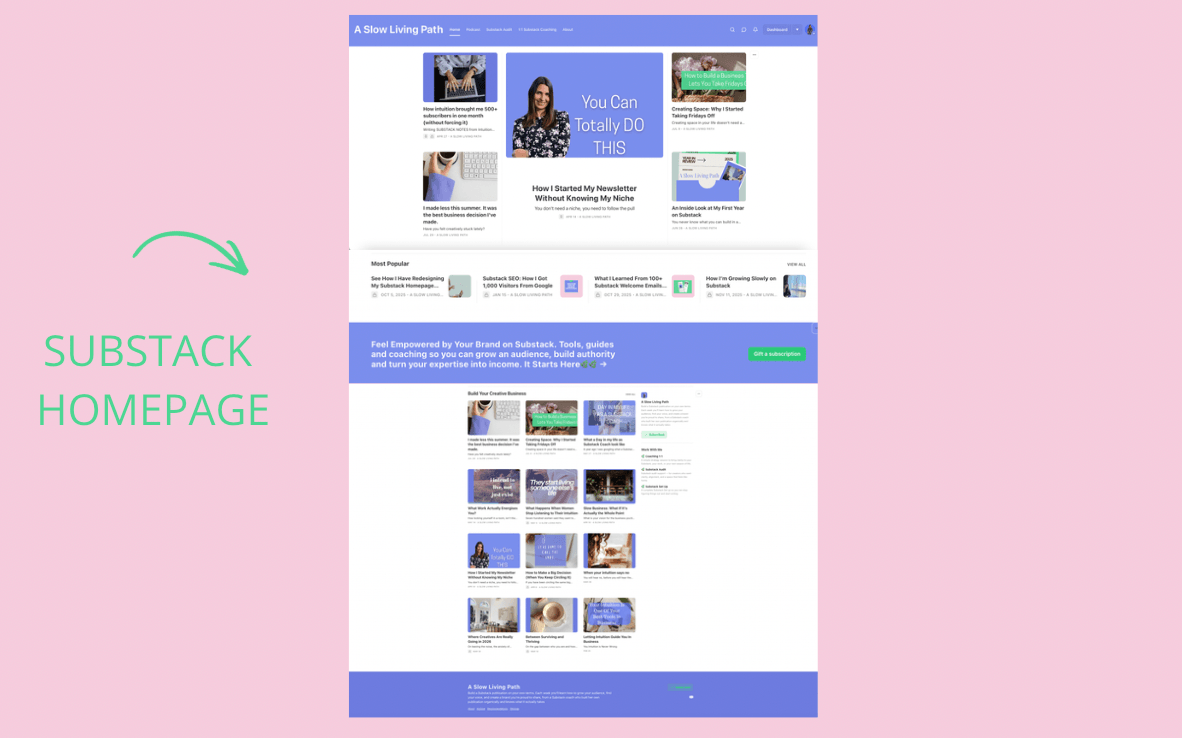
Before focusing on growth, I created a Substack publication that could support the wider brand.
The goal was not simply to start sending newsletters. I wanted to build a publication with a clear identity, recognisable visual language and an experience that made the right readers want to subscribe.
I approached the setup as both a newsletter project and a brand strategy project.
This included:
Choosing a publication name that reflected the brand’s values.
Developing a clear description and positioning.
Creating a branded Substack homepage.
Establishing a consistent visual identity.
Structuring the publication around clear content themes.
Creating a recognisable experience across Substack and my website.
Making the publication relevant to both readers and potential clients.
The homepage needed to answer three questions quickly:
What is this publication about?
Who is it for?
Why should someone subscribe?
I treated the Substack homepage as the publication’s digital storefront. It needed to communicate the tone of the brand while also making my expertise visible.
This became particularly important as A Slow Living Path developed into a platform for my work in Substack strategy, SEO, organic growth and newsletter marketing.
How I approached the setup
I considered the publication as part of a wider marketing ecosystem rather than an isolated newsletter.
The Substack needed to work alongside:
My personal website.
My SEO content.
My newsletter archive.
My coaching services.
My personal brand.
My organic audience-growth strategy.
This is the same approach I now bring to clients. A Substack setup should create the foundation for future content, audience growth and conversion, not just provide somewhere to publish.
2. Organic Audience Growth Through Substack Notes
Once the publication had a clear foundation, I used Substack Notes to build visibility and connect with other writers and readers.
Some Notes performed particularly well and brought significant numbers of new subscribers. One Note helped me gain approximately 170 subscribers within a few days, while several Notes contributed to gaining more than 500 subscribers in one month.
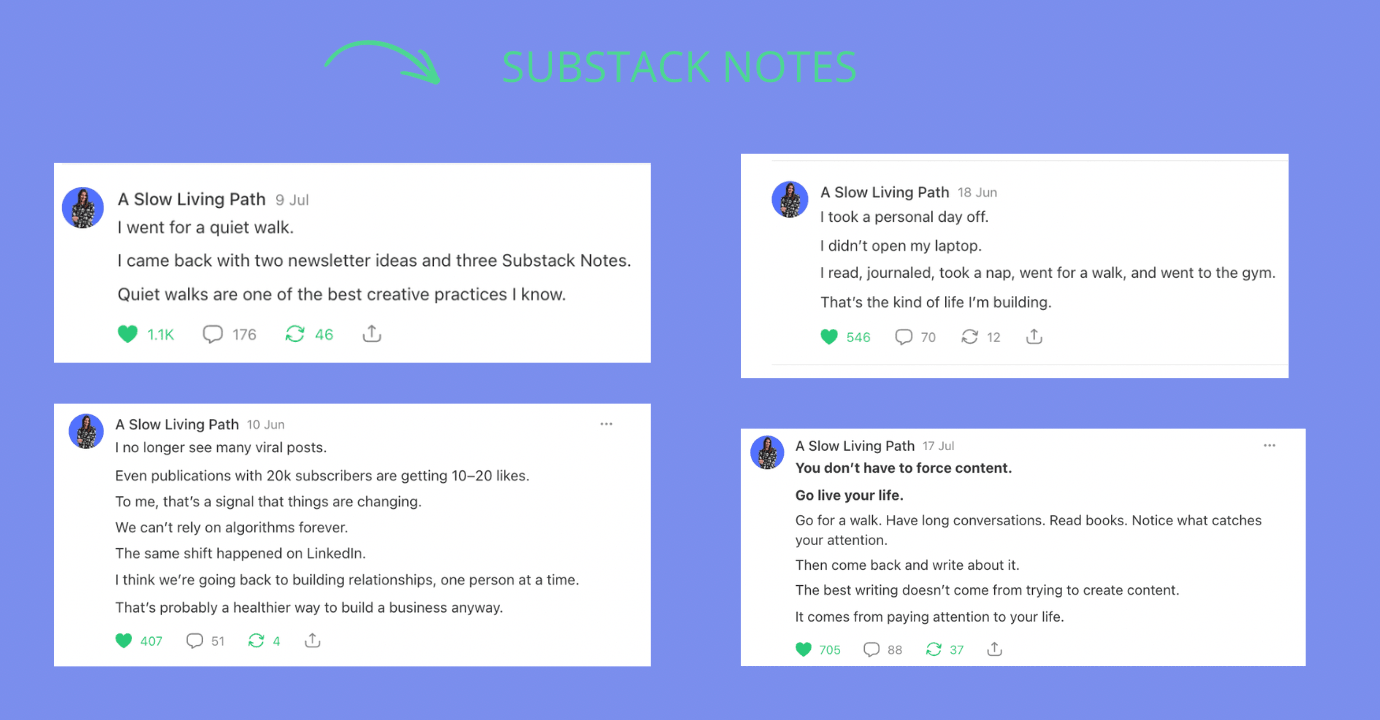
The important lesson was that Notes worked best when they reflected the same themes and point of view as the main publication.
I used Notes to share:
Ideas from longer newsletters.
Personal observations.
Practical marketing lessons.
Reflections on intuitive business.
Short insights about Substack growth.
Responses to other creators and publications.
This allowed me to grow through participation and relationship-building rather than relying only on external social media platforms.
3. Search Visibility Through Substack SEO
SEO became an important part of the publication’s growth strategy once I realised that my content could reach people beyond my existing subscribers.
I began creating content around topics that connected:
Real questions my audience was asking.
Problems I had experience solving.
Topics related to my Substack coaching and marketing services.
Search terms with a clear connection to newsletter growth and visibility.
I used descriptive, search-focused titles such as:
Substack SEO: How I Got 1,000 Visitors From Google
Substack SEO Audit: How I Get Dream Clients Through Google
What I Learned From 100+ Substack Welcome Emails
An Inside Look at My First Year on Substack
These titles helped make the subject of each article clear while also creating a reason for the reader to click.
I also used relevant headings, internal links and first-hand examples to make the content useful for both search visitors and existing subscribers.
You can read more about this process in Substack SEO: How I Got 1,000 Visitors From Google.

Over one year, A Slow Living Path generated 406,000 impressions and approximately 5,300 clicks from Google. This demonstrated that Substack content could attract an audience beyond the existing subscriber base.
4. Building Visibility Through Substack Recommendations
Alongside SEO and Notes, I grew the publication through Substack recommendations and relationships with other creators.
Being recommended by relevant publications helped A Slow Living Path reach readers who were already interested in writing, creativity, slow living and intentional business.

Over 50+ Substack Creators Recommend A Slow Living Path Organically
This reinforced an important part of my approach: organic growth is not only about search traffic. It also comes from building relationships within the platform and creating content that other writers feel comfortable recommending.
5. Building a Simple Offer Ecosystem
Once the audience was there, I gave readers somewhere to go next.
I introduced a small, accessible offer, a clarity call and a simple path from reading my content to exploring how we could work together.
The journey became:
Substack post→relevant service page→paid support
Once this path was in place, bookings started coming in.
That single change turned the publication from an audience-building platform into a business development channel.
Many newsletters stop at the writing. They focus on publishing consistently, gaining subscribers and producing valuable content but they do not consider what the reader should do next.
The reader journey is what turns readers into clients.
I began connecting relevant content to the services that solved the problems being discussed. For example:
A post about setting up a publication led to my Substack Setup service.
A post about unclear positioning led to my Substack Audit.
A reader who wanted personalised direction could book a Substack coaching call.
The offers were not disconnected from the content. They were the natural next step.
This created a simple offer ecosystem:
Free Substack content builds awareness and trust.
Practical articles demonstrate expertise.
Service pages explain how I can help.
A clarity call gives potential clients a low-pressure next step.
Coaching or consulting provides the deeper support.
The aim was not to push an offer into every piece of content. It was to make the next step visible when a reader needed more help than a free article could provide.
6. Growing Substack Organically
I grew A Slow Living Path primarily through organic publishing, Substack Notes, recommendations and content that people wanted to share.
I also allowed intuition to guide what I wrote.
Many writers talk themselves out of publishing the post they genuinely want to write. They assume it is too personal, too simple or not strategic enough. In my experience, that is often the post that creates the strongest connection.
Following that instinct—while still paying attention to audience behaviour and search data—is how the publication found its voice and its people.
The result was not a content strategy built entirely around trends. It was a recognisable brand built around ideas that mattered to me and resonated with the right readers.
More than 60 recommendations from other writers came through this process. I did not create a campaign asking people to recommend my publication. The recommendations came because the content connected with their readers and gave them something worth sharing.
That became a quiet form of validation.
Organic growth built on a real brand does not always look dramatic. Sometimes it looks like:
A reader forwarding a post.
Another writer recommending your publication.
Someone replying to a Note.
A subscriber returning to several articles.
A potential client mentioning a piece of content on a call.
Each interaction strengthens the relationship between the reader and the brand.
I treated every Note and newsletter as part of a wider reader journey. The content needed to be valuable in its own right, but it also needed to create a natural next step—whether that was reading a related article, subscribing, exploring a service or booking a call.
7. Using Substack to Build a Business
A Slow Living Path became more than a place to publish. It became part of the way I attract and work with clients.
As the publication grew, I created a clear connection between my Substack content, my personal website and the services I offer. My essays and Notes introduce people to my ideas and approach, while SEO-optimised service pages give potential clients a clear next step when they are ready to work with me.
This helped me build search visibility for both my Substack and website across commercially relevant searches, including Substack setup, Substack audit and Substack coach UK.
The three examples below show how my content and service pages appear in Google for people actively looking for Substack support. This is the difference between building an audience and building a business: the content brings people into the brand, while the service pages help turn relevant visibility into enquiries.
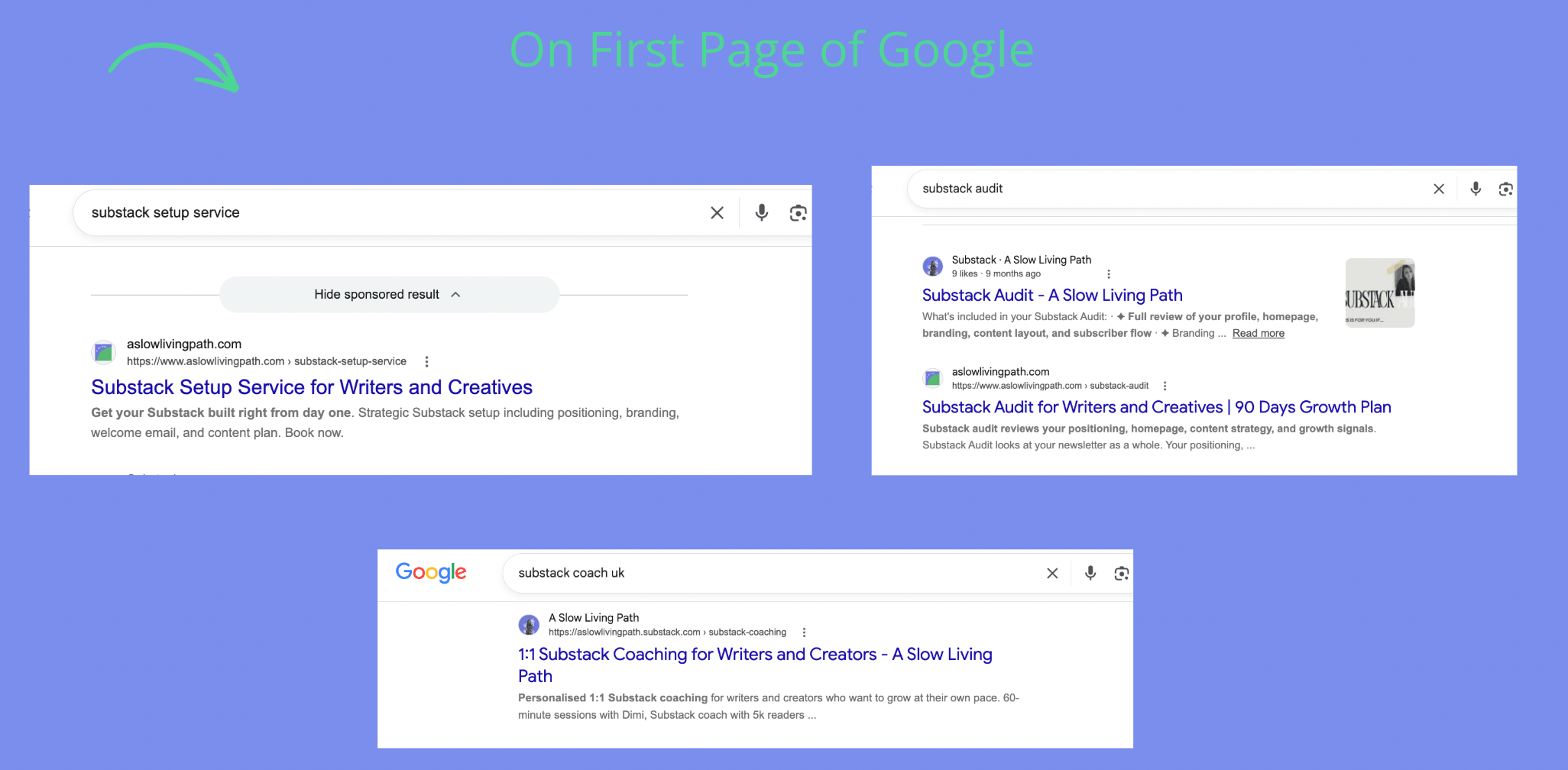
Google search results showing A Slow Living Path and its related service pages appearing on the first page for commercially relevant searches: “Substack setup”, “Substack audit” and “Substack coach UK”. Results captured in August 2026.
This is the reader journey I now build for clients: essays and Notes create awareness, SEO-focused content demonstrates expertise, and strategically positioned service pages give potential clients somewhere to go next. The brand creates trust before someone books a call, while the offer ecosystem turns that trust into coaching, audits or setup work.
Substack was the platform where I built the audience, but the business grew by connecting that audience to a clear brand, searchable services and a simple path to working with me.
8.What I Now Build For Clients
Everything I learned through A Slow Living Path now shapes my client work.
I help coaches, consultants, writers and creative business owners build Substack publications that:
Have a clear and distinctive brand.
Attract the right audience organically.
Use SEO to increase discoverability.
Turn readers into subscribers.
Connect subscribers with relevant offers.
Create a simple path from content to enquiry.
Support the wider business rather than existing separately from it.
The goal is not to help someone grow a newsletter for the sake of having more subscribers.
The goal is to build a publication that supports visibility, authority, trust and revenue.
I now help clients create this system in a fraction of the time it took me to work it out through experimentation.
Final Thoughts
Building a Substack business is not about choosing between authentic content and commercial strategy. You need both.
The content gives people a reason to pay attention. The brand helps them remember you. SEO helps new people discover you. The offer ecosystem gives them somewhere to go. And the reader journey turns that attention into meaningful business growth.
That is the approach I bring to my Substack setup, coaching, audit and newsletter strategy work.
Turn Your Substack Into a Business Asset
If you want to use Substack to grow your audience, strengthen your brand and attract clients, I can help you build the strategy behind it.
I offer support with:
Substack setup and branded publication structure.
Substack SEO and search visibility.
Organic newsletter growth.
Substack audits.
Newsletter positioning and brand strategy.
Offer and reader-journey mapping.
1:1 Substack coaching.