Substack Setup for Coaches, Consultants and Creators: A Step‑by‑Step Guide (2026)
Setting up Substack is simpler than it looks.
The challenge is knowing what actually matters, so you don’t waste time figuring it out piece by piece.
If you are a coach, consultant, creator or independent expert, you are not starting from scratch. You already have the thinking, the experience, and the voice. Substack is simply a different container for it, one that can bring you consistent visibility through both search and built‑in discovery.
But it does work differently.
When I first moved to Substack, I came with over a decade in marketing and experience running a B2B consultancy. I understood SEO and audience growth, but I still had to relearn how things connect on this platform. Once that clicked, the results followed.
In a year, my publication grew to 7,000+ readers and became one of my main source of inbound clients.
Since then, I have set up multiple Substacks for coaches, consultants and creators, and the pattern is always the same. When the foundation is clear and built in the right order, everything else becomes easier.
This is the process I use.
If you follow along as you read, you will have your Substack set up, structured, and ready to grow by the end.
Who this is for: coaches, consultants, therapists, designers, developers, writers, and anyone using Substack as a professional home base, not just as a casual newsletter.
Why Substack Works Differently Than Social Media
The mistake I see most often is treating Substack as another broadcast channel. You post, you wait, you measure the response against what a good Instagram day looks like and by week three you've decided it isn't working.
Social platforms reward frequency and punish absence. Substack rewards accumulation. A post you publish today can bring you a client eight months from now, because it stays where you put it, keeps ranking, keeps getting recommended and keeps working while you're in sessions.
That difference is why setup matters so much, especially if you’re using Substack to attract clients, collaborators, or customers. You're building something a potential client or reader walks through on their own, without you there to explain any of it.
Step 1: Choose Your Substack Name and URL Carefully
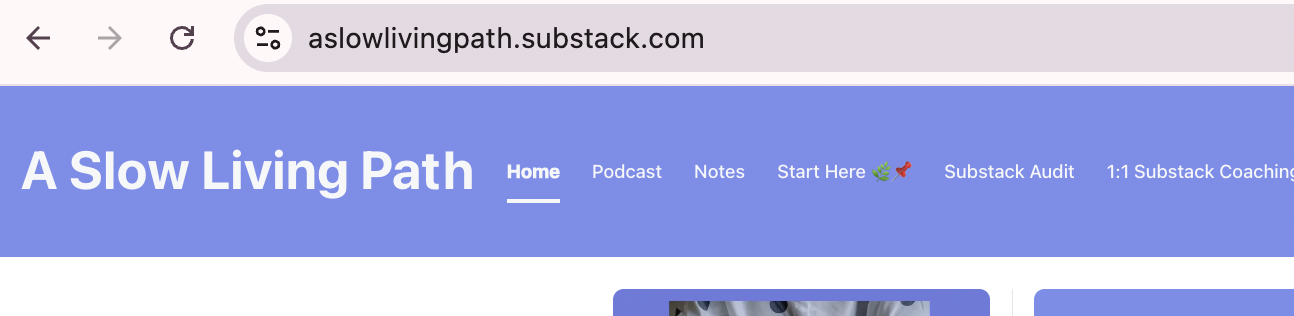
When you set up your Substack, you will choose a publication name and a URL.
They sound like the same thing, but they are not.
Your publication name is easy to change.
Your URL is not. Substack only lets you change your URL once.
I have seen many creators pick a name and matching URL at the start, then later realise they want to change direction. Maybe their niche shifts, their offer evolves, or they want a different positioning. Changing the name is simple. Changing the URL is where it gets messy.
That is why it is better to think about your URL differently.
A safe option is to base your URL on your own name or your brand name. Something stable that will still make sense even if your work evolves.
Your publication name can then be more specific. It can reflect what you do right now, and you can update it over time as your focus changes.
So keep it simple:
Choose a flexible, long‑term URL.
Treat your publication name as the part you can refine.
SEO tip: Avoid overly narrow URLs like coachingforlife.substack.com if you might expand beyond coaching later. A name‑based URL (yourname.substack.com or yourbrand.substack.com) is more future‑proof.
Step 2: Set Up Your Substack Profile Page First
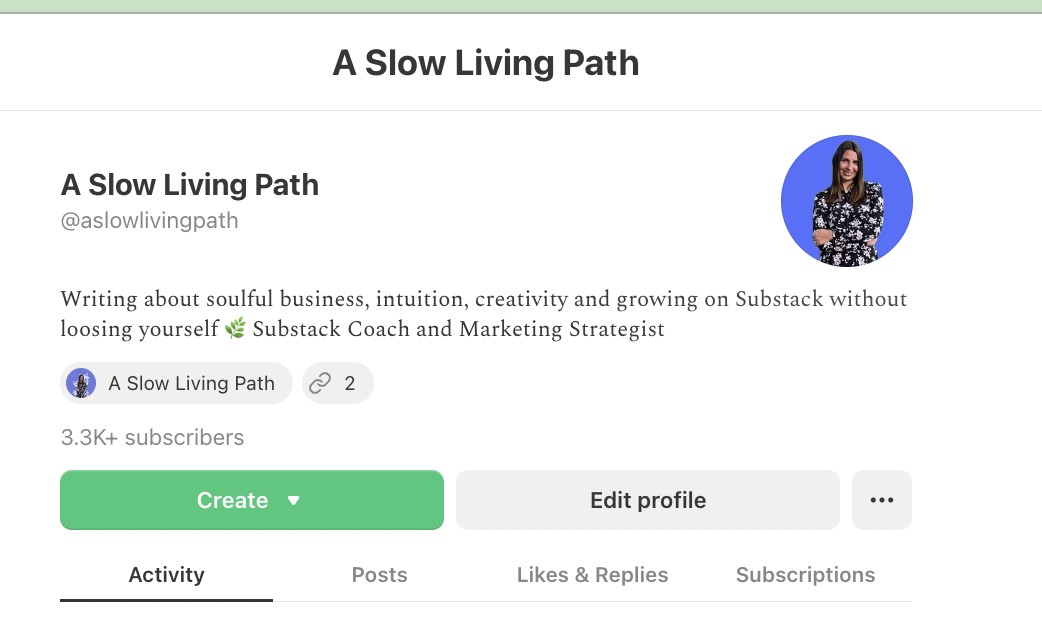
If you set up one thing this week, make it your profile page.
It is one of the most visited pages on your Substack and often the first place people click when they discover you. Before they subscribe, before they read more, they check who you are.
Start with your bio.
Write it like you speak, not like a corporate summary. People are not looking for polished language, they are looking for a sense of who you are, what you write about, and why it matters.
Then look at your links.
This is where many creators miss an easy opportunity. You can guide readers to the next step, whether that is your website, your services page, or a way to work with you.
Keep it focused. One or two links is enough. Too many options dilute attention.
Step 3: Brand Your Substack
This is the step almost every creator skips and it's why so many publications look interchangeable.
When I set up a publication for a client, we choose the palette first. Three to five colours, no more:
One that carries the brand
One or two supporting shades
A background tone
Something for accents and buttons
Then two typefaces: one for headings and one for body, chosen so they read clearly on a phone at seven in the morning, which is where most subscribers will actually meet your work.
Deciding this early changes everything downstream. Your header, your buttons, your post images, the way a paragraph sits on the page—all of it starts pulling in the same direction, and a reader who has seen one of your notes recognises your writing before she reads a word.
The practical version is faster than it sounds. Pull the colours from what you already use on your website or your Instagram, because consistency across the places you show up is worth more than a fresh palette. Save the hex codes somewhere findable, set them in your publication design settings, then use the same ones inside your posts.
A publication that looks considered tells a stranger you take this work seriously before she's read a sentence.
Step 4: Write Your Substack Welcome Email
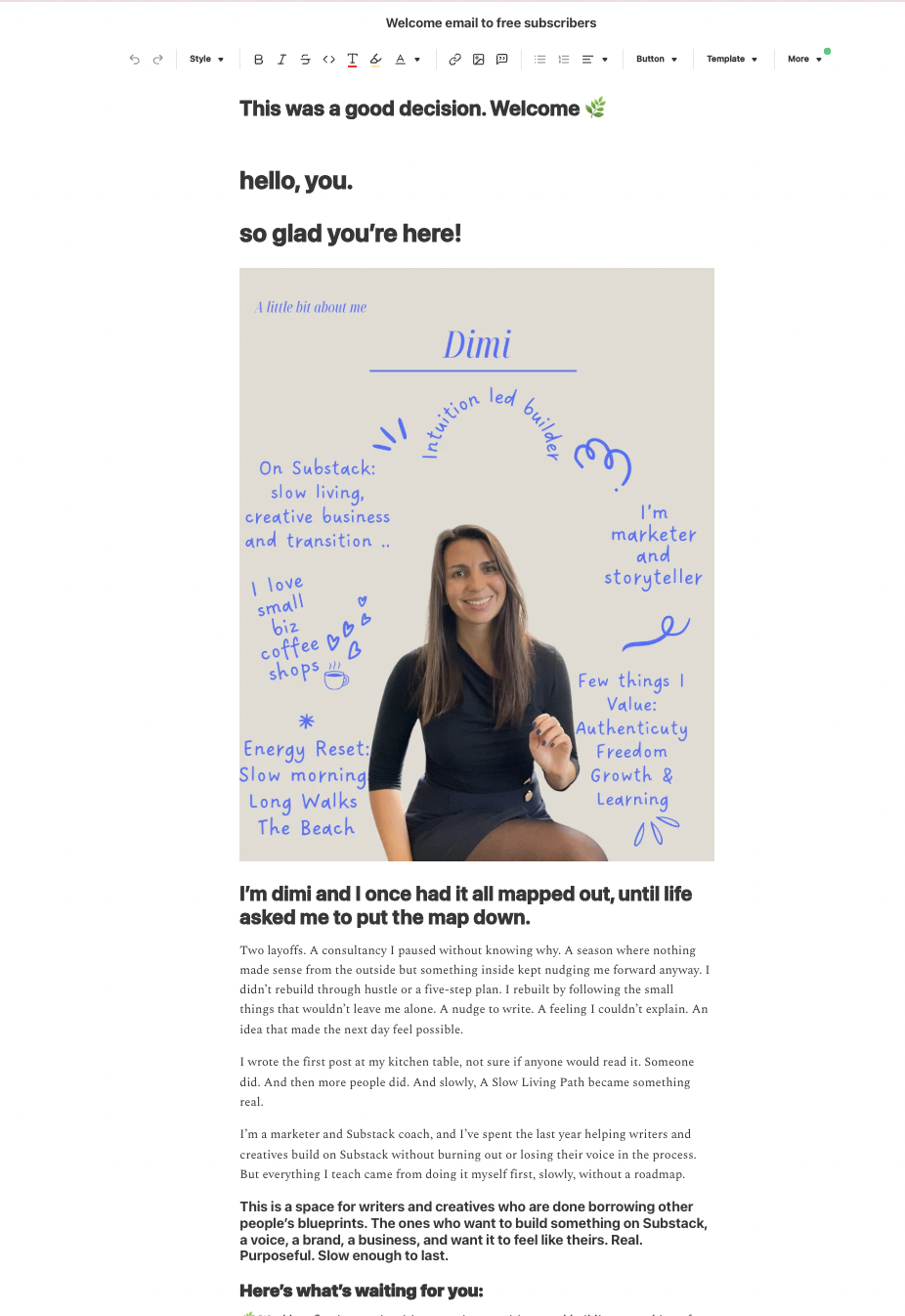
I have analysed over 100 Substack welcome emails and you would be surprised how many people skip this step.
When someone subscribes, Substack automatically sends a welcome email. Most creators never touch this setting, so what goes out is a default “thanks for subscribing” message.
That email will likely have the highest open rate you ever get. And it is completely wasted.
A good Substack welcome email does three simple things:
It tells people who you are and why you write.
It sets expectations: what they will receive and how often.
And it points them to one piece of your work to start with.
Just one.
When a new reader is given ten links, they open none. When they are given one clear next step, they take it.
You can also personalise it.
Give them something useful straight away. A strong article, a starting point, or a piece that represents your work well. This is where the relationship begins.
Then look at how it feels.
Brand it in a way that matches the rest of your Substack. Use your colours, keep the layout clean, and add a photo of you rather than a logo. It should feel like a message from a person, not a system notification.
Step 5: Write Your First Five Substack Posts
Publishing one piece and waiting is the most common way creators lose a year on this platform.
Five posts give a new reader somewhere to go. They give you a homepage that looks like a body of work rather than an experiment. They also give you enough material to see which ideas people respond to, which you cannot learn from a sample of one.
Write them in your own voice, with your own client stories and your own examples.
Use your palette in every one of them. The same two or three colours, image treatments that match, headings in your chosen typeface. Five posts that look like they belong together read as a body of work. Five posts in five different styles read as someone still deciding.
Then add a clear line at the end of each piece explaining who you are and how someone can work with you, linked to the relevant service page. That isn't promotion. It's removing the obstacle for the reader who has already decided she wants your help and can't find the door.
See how you can design your subtack post in this guide.
Step 6: Build a Homepage That Shows Your Thinking
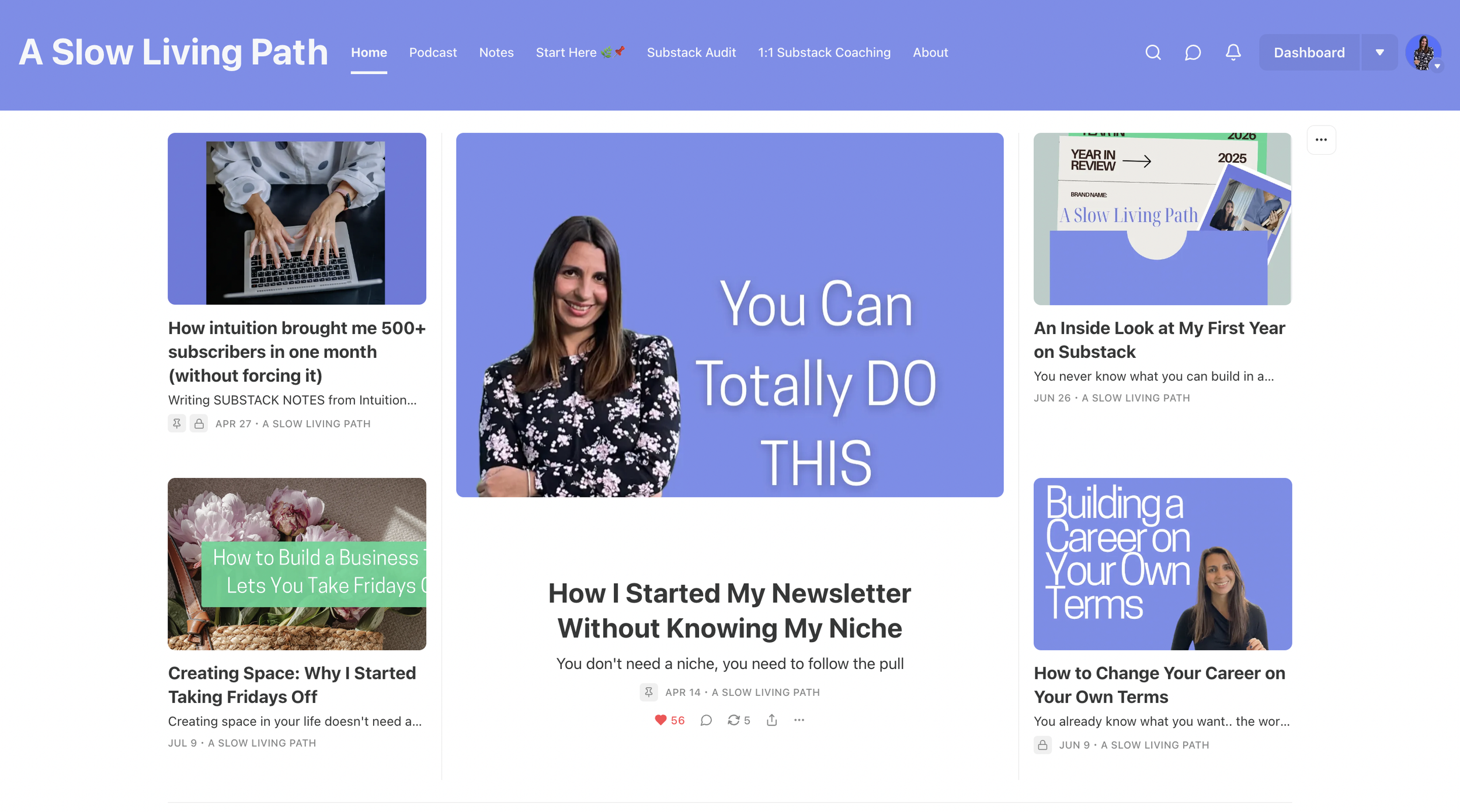
Now that you have five posts, you can start arranging them. This is the step where your publication stops looking like a newsletter and starts looking like a business.
Coaches, consultants and creators should treat the Substack homepage the way they treat a website. It's where someone sees your body of work, your thinking, and your expertise, all in one place, without you having to explain any of it.
Start with one question: What do I want someone to understand about me and this publication in the first ten seconds?
Answer that honestly and the layout mostly builds itself. Whatever you decide matters most goes at the top, whether that's who you help, what you believe, or a single piece of writing that captures how you think better than anything else you've published.
There's no correct layout, which is either freeing or paralysing depending on the day. What I use with clients instead is a simpler test. Can someone arriving cold get a quick answer to three questions?
Who is this person?
What does she write about?
How would I work with her if I wanted to?
If your homepage answers those three, it's doing its job.
Sections are how you get there. A section on Substack is a category, and it gives you a navigation bar across the top of your publication. Each one can take a reader deeper into your work or toward the way you help people. Three or four is plenty at this stage.
For most service‑based creators the sections fall out naturally:
One for your main thinking: essays and frameworks you want to be known for.
One for practical guidance: how‑to pieces people find through search.
One for client stories or case studies.
Then your service page and your resources page sitting in the same navigation bar, so the way to work with you is visible from every single post.
Pin one post to the top. Choose the piece that best explains what you're doing and who it's for, and make that the first thing anyone reads. Most creators never use this and it's free positioning.
The point of all this arranging is to reduce the work your reader has to do. Someone who arrives, understands you quickly, finds a piece worth reading, and sees a clear route to working with you will come back. Someone who arrives and has to guess will close the tab, and you'll never know she was there.
Come back to this every few months. As your archive grows, the sections that made sense at five posts stop making sense at thirty and rearranging is much easier than it sounds.
If you prefer to watch this in action, I’ve recorded a full walkthrough of setting up a Substack homepage on YouTube. The video already has over 10,000 views. The interface has evolved slightly since I filmed it, but the structure and strategy are still exactly what I use with clients.
👉 Watch: How to Set Up Your Substack Homepage (YouTube)
Step 7: Use Substack Notes to Get Discovered
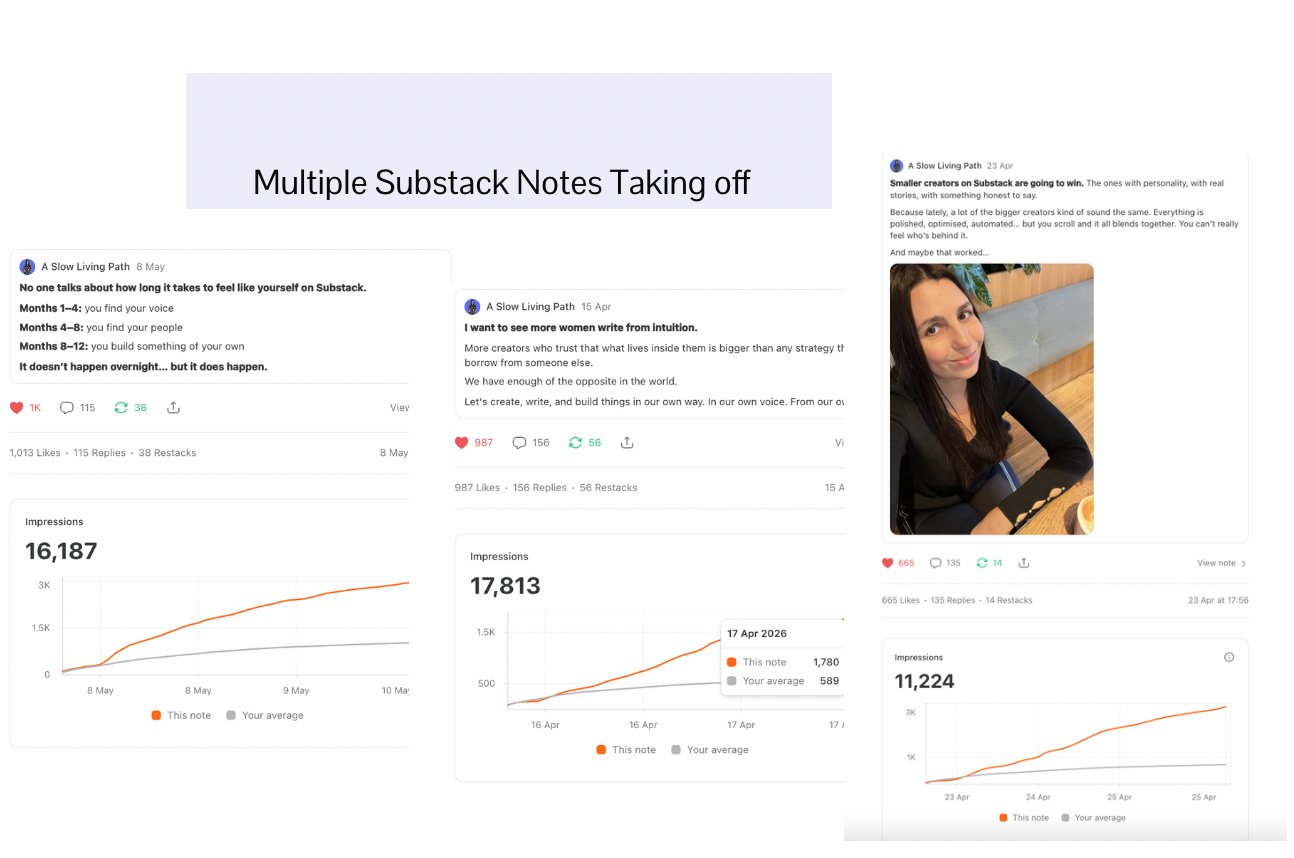
Notes are Substack's discovery engine, and for coaches, consultants and creators they're the closest thing to free distribution available right now.
A note is a short thought, quickly written, that travels well beyond your own subscribers when someone restacks or replies. Substack surfaces notes to people who have never heard of you, which is exactly the audience you need.
Write them conversationally. Share:
The thing you said in a session or call yesterday that made a client go quiet for a second.
What you're changing your mind about.
The observation you'd normally save for a caption and never quite post.
The goal is showing how you think, often enough that people start recognising your name. That recognition turns into a subscriber, and later into a client or collaborator.If you are looking for more peronalised support, here are 3 ways I can help you with:
If you want a done‑for‑you setup so you can focus on your clients instead of fiddling with settings:

If you’re not sure whether you need the full setup or just a targeted audit, you can start here:
Whichever path you choose, the goal is the same: a Substack that works for your business while you focus on your clients, not on constantly posting for an algorithm
FAQ:
Is Substack right for coaches who don't like marketing themselves?
Yes, and it tends to suit them better than social media does. You write from your actual expertise instead of performing for an algorithm, and readers come to trust you through your thinking rather than your posting frequency. For coaches who find self-promotion draining, that's a calmer, more sustainable way to be found.
Can you get clients from Substack without a big following?
Yes. A large list is the wrong goal. What turns a newsletter into a business is clear positioning, a reader who fits your work, and an offer they can actually buy. A few hundred aligned readers with a visible way to work with you will out-earn thousands of subscribers who never understood what you sell.
How is a Substack different from a normal email list?
A normal list only reaches people who already found you. Substack adds discovery on top of email, so your posts can rank in search, get recommended to strangers, and travel through Notes. You still own your subscribers and can export them anytime. You get the ownership of email with a way to grow that a standalone list can't give you.
Do I have to post every week to get clients from Substack?
You don't. Consistency matters more than frequency. One considered post a fortnight, kept in your voice and pointed at the right reader, will do more than daily content you resent writing. Substack rewards work that accumulates, so a smaller number of strong posts keeps earning long after you publish them.
What should a coach actually write about on Substack?
Write the things you already say to clients. The idea that makes someone go quiet in a session, the pattern you see across everyone you work with, the belief that shapes how you coach. That kind of writing shows how you think, which is what a potential client is really deciding on before she books.
How do you turn Substack readers into paying clients?
Give every reader a clear, visible route to working with you, and make sure your publication answers who you help and how. Most readers don't convert because the path is hidden, not because they weren't interested. A line at the end of each post, a service page in your navigation, and a homepage that positions you will do most of the work.
Should I move my existing newsletter to Substack?
It depends what you want from it. If you rely on segmentation, automations and sales sequences, keep your current tool and use Substack alongside it for content and discovery. If you want reach, simplicity, and a place your writing can be found, moving over makes sense. Many coaches run both, one for nurture and one for growth.
How do I know if my Substack is set up to attract clients or just collect subscribers?
Look at whether a cold reader can tell who you help, what you believe, and how to work with you within about ten seconds. If any of those is missing, your publication is collecting readers rather than converting them. That gap between a list and a business is exactly what a Substack audit is built to find.
